Mirrors and Coins
Small reflective details are used to catch light, honor celebration, and give movement to ceremonial dress.
Cultural storytelling
TaaraLine treats heritage as a living practice. The atelier studies traditional dress, regional embroidery, ceremonial textiles, and women-led craft memory to create luxury Afghan fashion for today.
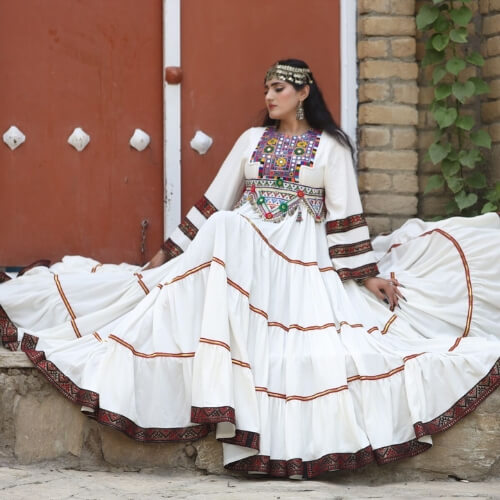
Fashion history
Afghan womenswear has long held a balance of ornament and utility. Silk routes, city tailoring, nomadic movement, family ceremonies, and regional textile traditions all shaped garments that could signal beauty, belonging, and occasion.
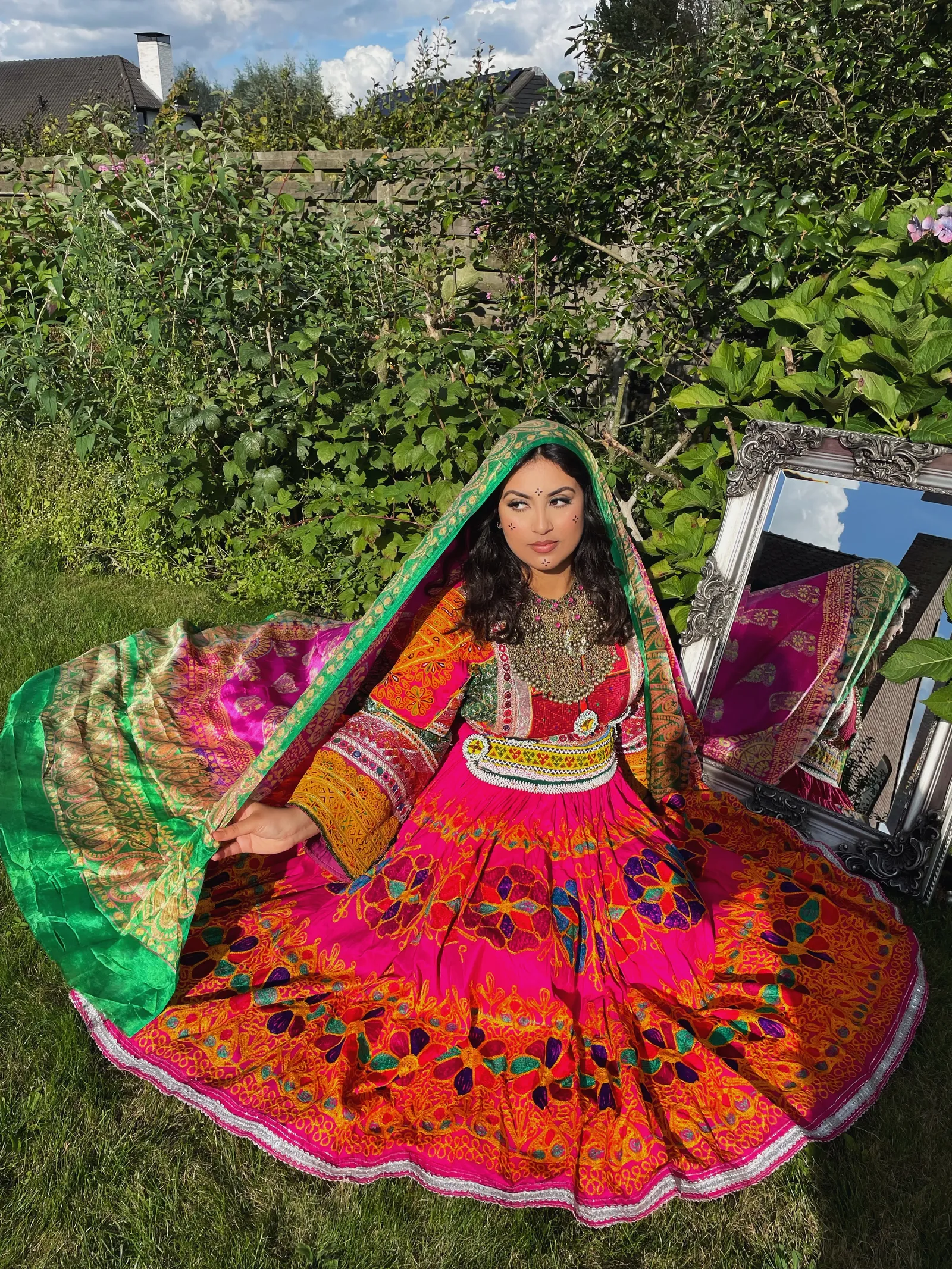
Embroidery meanings
Small reflective details are used to catch light, honor celebration, and give movement to ceremonial dress.
Repeating borders frame the garment and often signal region, family memory, and inherited textile rhythm.
Floral embroidery brings softness to structured panels, balancing strength with feminine elegance.
Handmade process
The process is slow by design. A TaaraLine piece is built through material study, proportion, hand placement, and finishing, not by fast production cycles.
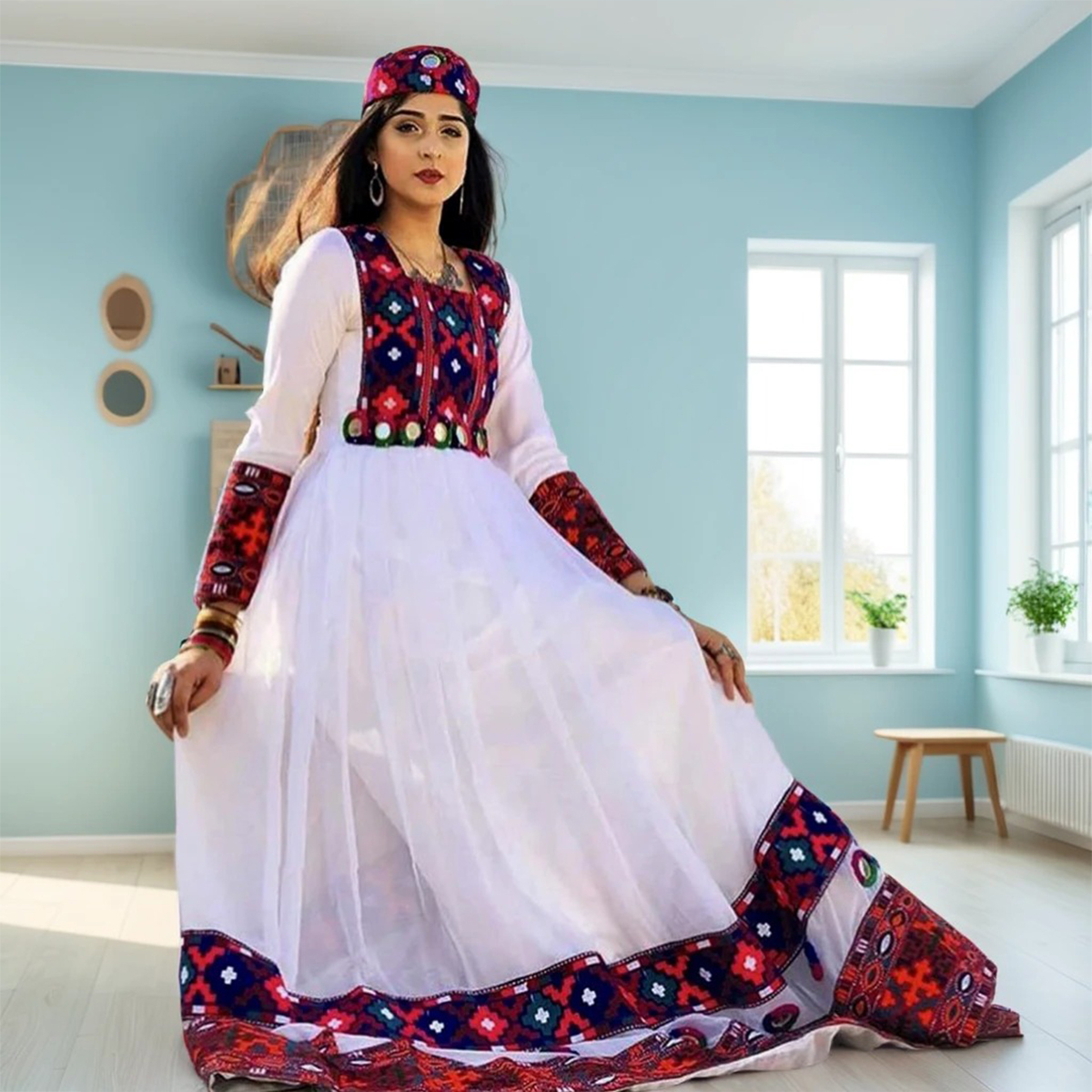
Regional fashion influences
Kabul: polished city tailoring, refined veils, and precise trims.
Kandahar: saturated reds, gold thread, and powerful ceremonial contrast.
Herat: fine needlework, floral rhythm, and painterly surface detail.
Nuristan: bold geometry, metal ornaments, and high-impact decorative panels.
Badakhshan: mountain blues, layered fabric, and dramatic skirt movement.
Timeline
Trade routes carried silk, dyes, metal ornaments, and pattern language through Afghan regions, creating layered dress traditions.
Tailored city garments brought polish to embroidery, jewelry, veil styling, and ceremonial womenswear.
Kuchi dress preserved bold color, mirrorwork, coins, and portable ornament as symbols of celebration and identity.
TaaraLine reinterprets heritage techniques through edited silhouettes, premium finishing, and intimate made-to-order detail.
Documentary visuals
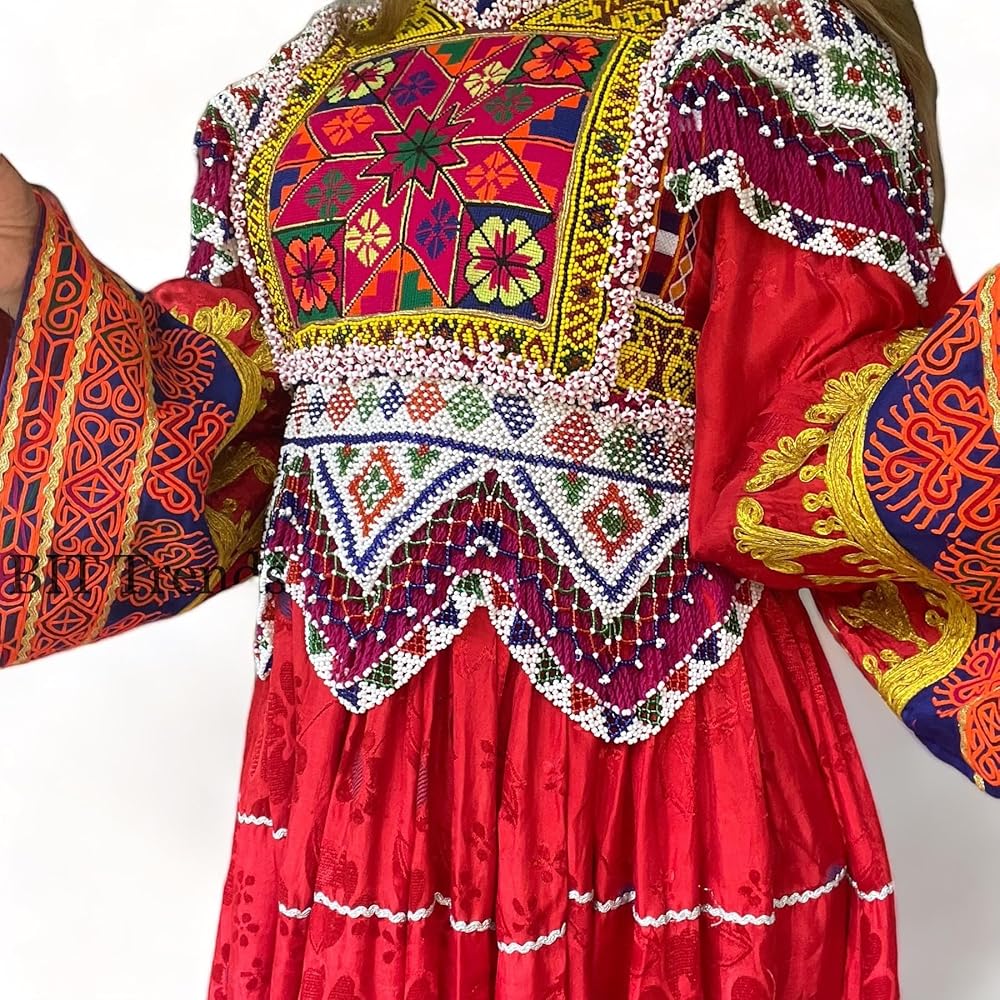
Artisan stories
Panels are worked slowly, with border placement checked against the whole garment so detail supports the silhouette.
Volume is balanced through shoulder line, sleeve fall, lining weight, and the way the skirt opens in motion.
Veil, jewelry, and textile edge are styled together so every TaaraLine piece feels ceremonial without excess.